

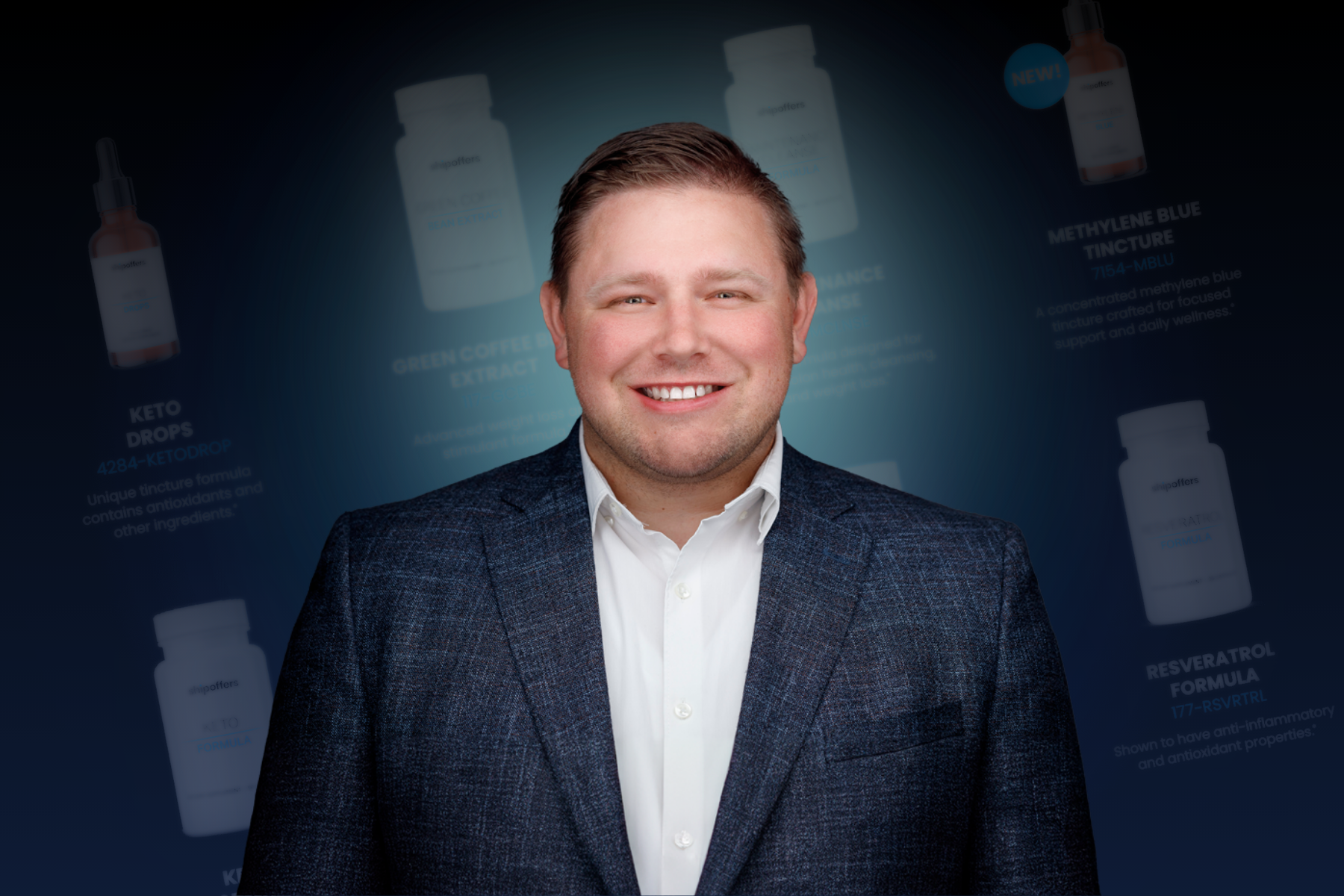
Pick Your Next Winning Offer with Josh Noble
With over 50 on-demand products in our catalog, and 7 brand new additions, there’s no shortage of opportunities to test. The question is: how do you know where to start? We sat down with our VP of Sales, Josh Noble, to talk through how to make that call.
What should a client consider when deciding which products fit their audience?
Too many brands start by asking what’s trending. While that information is important to consider, the better question to ask is, “What problem is my audience trying to solve?”
Once you have that, run it through these three checks:
Problem-Solution Fit: Does this product actually solve a pain point your audience already feels? Not one you wish they had, but one they’re already aware of and trying to fix.
Offer Alignment: Does it match how you’re positioned? If you’re a premium brand, you need a premium product. If you’re going for the mass market, that’s a different play.
Monetization Potential: Can this product support strong AOV, repeat purchases, and healthy margins? If the economics don’t work, it doesn’t matter how good the product is.
The brands that win aren’t guessing. They’re aligning their product strategy with how their audience actually thinks and buys.
How does on-demand fulfillment change the risk equation when testing something new?
It completely changes the game.
Traditionally, you would be required to forecast inventory, place large MOQs, and tie up cash for months before you ever saw a single sale.
With on-demand, the whole equation flips. You launch with no upfront inventory. No waiting around for production. You test with real orders from real customers, and then you scale based on what’s actually selling, not what you hoped would.
It’s the difference between asking “How much do I think I’ll sell?” and “What is the market actually telling me?” That’s a completely different way to build a business.
What product combinations do you see working well together for upsells and bundles?
The products that bundle well solve adjacent problems.
For example:
- Weight loss: Metabolism booster + appetite control + probiotic
- Sleep: Magnesium + stress support + nighttime formula
- Men’s health: Testosterone support + nitric oxide + multivitamin
When you bundle that way, you’re increasing perceived transformation, you’re increasing AOV, and you’re actually improving results for the customer, leading to lower refunds.
When products enhance each other’s outcomes, the upsell feels helpful rather than pushy. That’s the difference between a customer who feels like they got sold and one who feels like they got taken care of.
Once a client finds a winner, what’s the smartest next step to scale it?
You want to think about it in phases:
Phase 1: Optimize. Improve conversion rate, strengthen your upsell flow, and tighten retention.
Phase 2: Increase traffic. Add new traffic channels and increase budget on winning segments.
Phase 3: Extend the brand. Add complementary SKUs, introduce subscription models, and develop premium tiers.
The mistake we see all the time is brands jumping straight to phase two. They find something that works and want to pour fuel on it immediately. But if your funnel has holes (weak upsells, poor retention, conversion issues), more traffic just means more waste. Fix the economics first. Then scale the volume.
What's the most common mistake you see when clients are selecting offers, and how can they avoid it?
The biggest mistake we see isn't picking the wrong product. It's overthinking the decision and never launching.
Brands get stuck in analysis: market research, competitor breakdowns, ingredient debates, packaging tweaks. While they're trying to make the "perfect" choice, they're losing time.
To get ahead, test fast, learn fast, and adjust fast.
You don't need perfect data to launch. The market will give you better feedback in 30 days than months of internal debate ever will.
Momentum beats perfection every time.
What’s Your Next Test?
The whole point of on-demand is that you don’t have to guess. You’re not forecasting inventory or tying up cash in hopes that something sells. You get to test, see what the market actually responds to, and make decisions based on real data.
Take a look at what you’re already running, find a product in the catalog that aligns with your audience, and see how it performs!
Heading to AW Global in Dubai? Josh will be expanding on this topic at the Digistore24 Suite on March 5th, 1-2 pm at the 25Hours Hotel. Stop by and talk strategy.
February 27, 2026
With over 50 on-demand products in our catalog, and 7 brand new additions, there’s no shortage of opportunities to test. The question is: how do you know where to start? We sat down with our VP of Sales, Josh Noble, to talk through how to make that call.
What should a client consider when deciding which products fit their audience?
Too many brands start by asking what’s trending. While that information is important to consider, the better question to ask is, “What problem is my audience trying to solve?”
Once you have that, run it through these three checks:
Problem-Solution Fit: Does this product actually solve a pain point your audience already feels? Not one you wish they had, but one they’re already aware of and trying to fix.
Offer Alignment: Does it match how you’re positioned? If you’re a premium brand, you need a premium product. If you’re going for the mass market, that’s a different play.
Monetization Potential: Can this product support strong AOV, repeat purchases, and healthy margins? If the economics don’t work, it doesn’t matter how good the product is.
The brands that win aren’t guessing. They’re aligning their product strategy with how their audience actually thinks and buys.
How does on-demand fulfillment change the risk equation when testing something new?
It completely changes the game.
Traditionally, you would be required to forecast inventory, place large MOQs, and tie up cash for months before you ever saw a single sale.
With on-demand, the whole equation flips. You launch with no upfront inventory. No waiting around for production. You test with real orders from real customers, and then you scale based on what’s actually selling, not what you hoped would.
It’s the difference between asking “How much do I think I’ll sell?” and “What is the market actually telling me?” That’s a completely different way to build a business.
What product combinations do you see working well together for upsells and bundles?
The products that bundle well solve adjacent problems.
For example:
- Weight loss: Metabolism booster + appetite control + probiotic
- Sleep: Magnesium + stress support + nighttime formula
- Men’s health: Testosterone support + nitric oxide + multivitamin
When you bundle that way, you’re increasing perceived transformation, you’re increasing AOV, and you’re actually improving results for the customer, leading to lower refunds.
When products enhance each other’s outcomes, the upsell feels helpful rather than pushy. That’s the difference between a customer who feels like they got sold and one who feels like they got taken care of.
Once a client finds a winner, what’s the smartest next step to scale it?
You want to think about it in phases:
Phase 1: Optimize. Improve conversion rate, strengthen your upsell flow, and tighten retention.
Phase 2: Increase traffic. Add new traffic channels and increase budget on winning segments.
Phase 3: Extend the brand. Add complementary SKUs, introduce subscription models, and develop premium tiers.
The mistake we see all the time is brands jumping straight to phase two. They find something that works and want to pour fuel on it immediately. But if your funnel has holes (weak upsells, poor retention, conversion issues), more traffic just means more waste. Fix the economics first. Then scale the volume.
What's the most common mistake you see when clients are selecting offers, and how can they avoid it?
The biggest mistake we see isn't picking the wrong product. It's overthinking the decision and never launching.
Brands get stuck in analysis: market research, competitor breakdowns, ingredient debates, packaging tweaks. While they're trying to make the "perfect" choice, they're losing time.
To get ahead, test fast, learn fast, and adjust fast.
You don't need perfect data to launch. The market will give you better feedback in 30 days than months of internal debate ever will.
Momentum beats perfection every time.
What’s Your Next Test?
The whole point of on-demand is that you don’t have to guess. You’re not forecasting inventory or tying up cash in hopes that something sells. You get to test, see what the market actually responds to, and make decisions based on real data.
Take a look at what you’re already running, find a product in the catalog that aligns with your audience, and see how it performs!
Heading to AW Global in Dubai? Josh will be expanding on this topic at the Digistore24 Suite on March 5th, 1-2 pm at the 25Hours Hotel. Stop by and talk strategy.
